PhD: monitoring and forecasting cutting-tool wear in mechatronic machining systems
Short current pulses through the tool–workpiece contact, wavelet analysis of vibration and a neural network: real-time forecasting of cutting-edge wear and failure, without microscope training.
| Years | 2002–2007 |
|---|---|
| Client | Ufa State Aviation Technical University, Department of Automation of Technological Systems; supervisor Prof. V. Ts. Zoriktuev, DSc; RFBR grant 06-08-00198 |
| Location | Ufa, Russia |
| Role | PhD candidate (process automation), author of the methods and system |
Challenge
Industry makes no sensors for cutting-tool wear or breakage: tools are changed by statistics, and tool life is set by the worst piece in a batch, so the most durable tools waste 30% or more of their life. On heat-resistant alloys dimensional wear can reach tens of microns in one pass — against a machine accuracy of 2–3 µm. An edge chips in a fraction of a second, and by the time a crack shows under a microscope it is too late to warn. An indirect sign is needed that changes before visible damage and does not depend on cutting conditions.
Solution
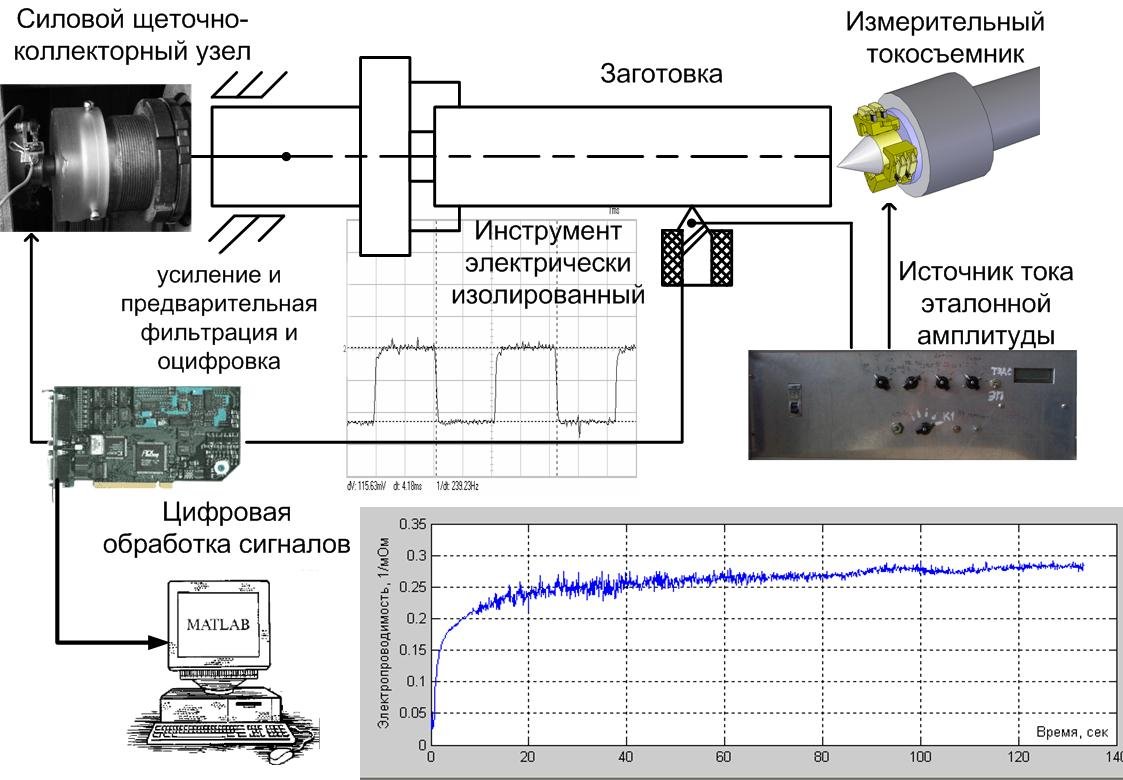
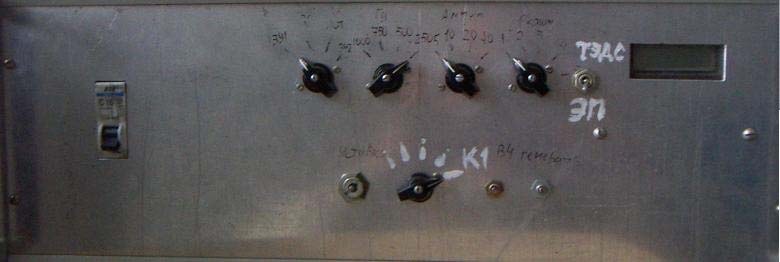
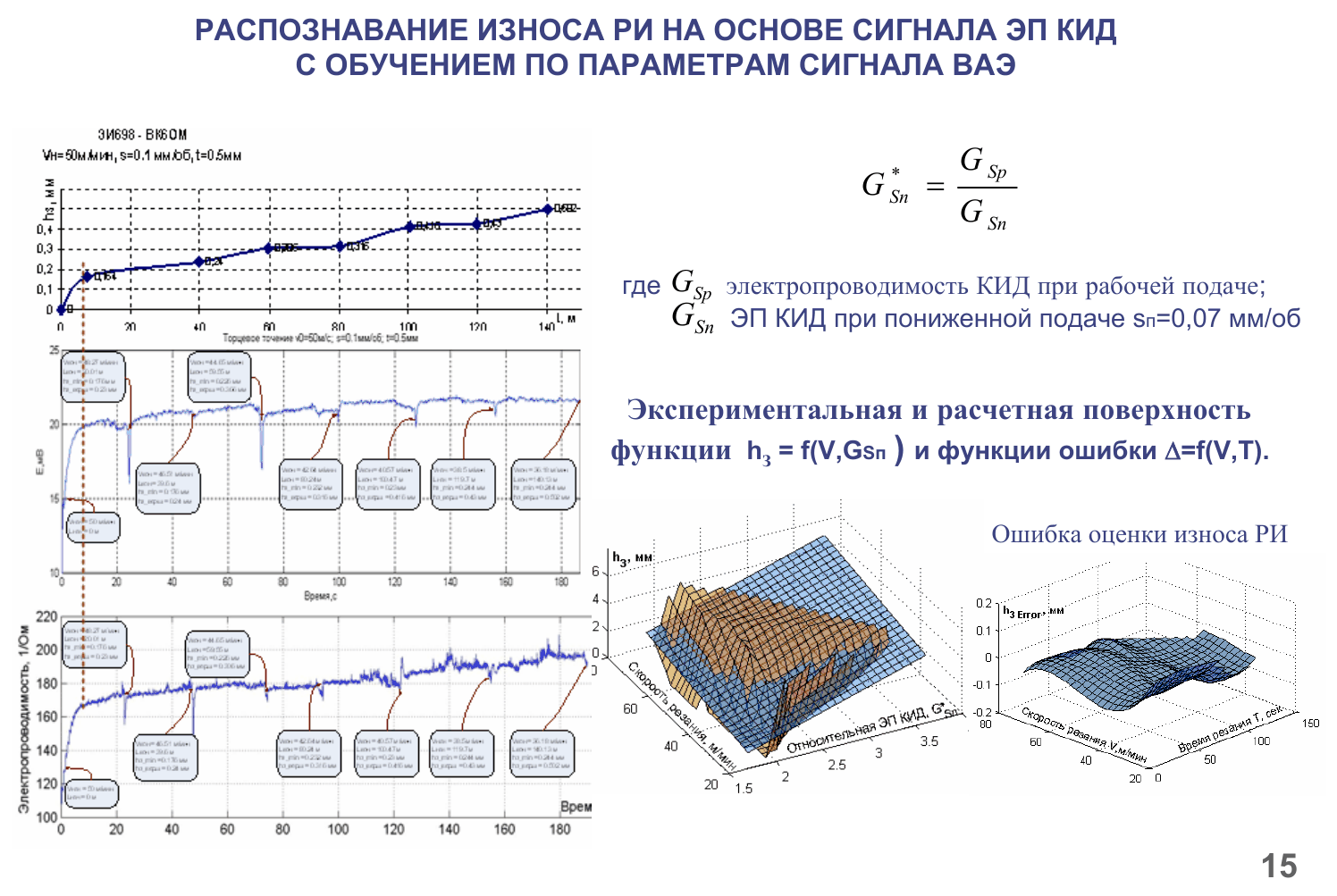
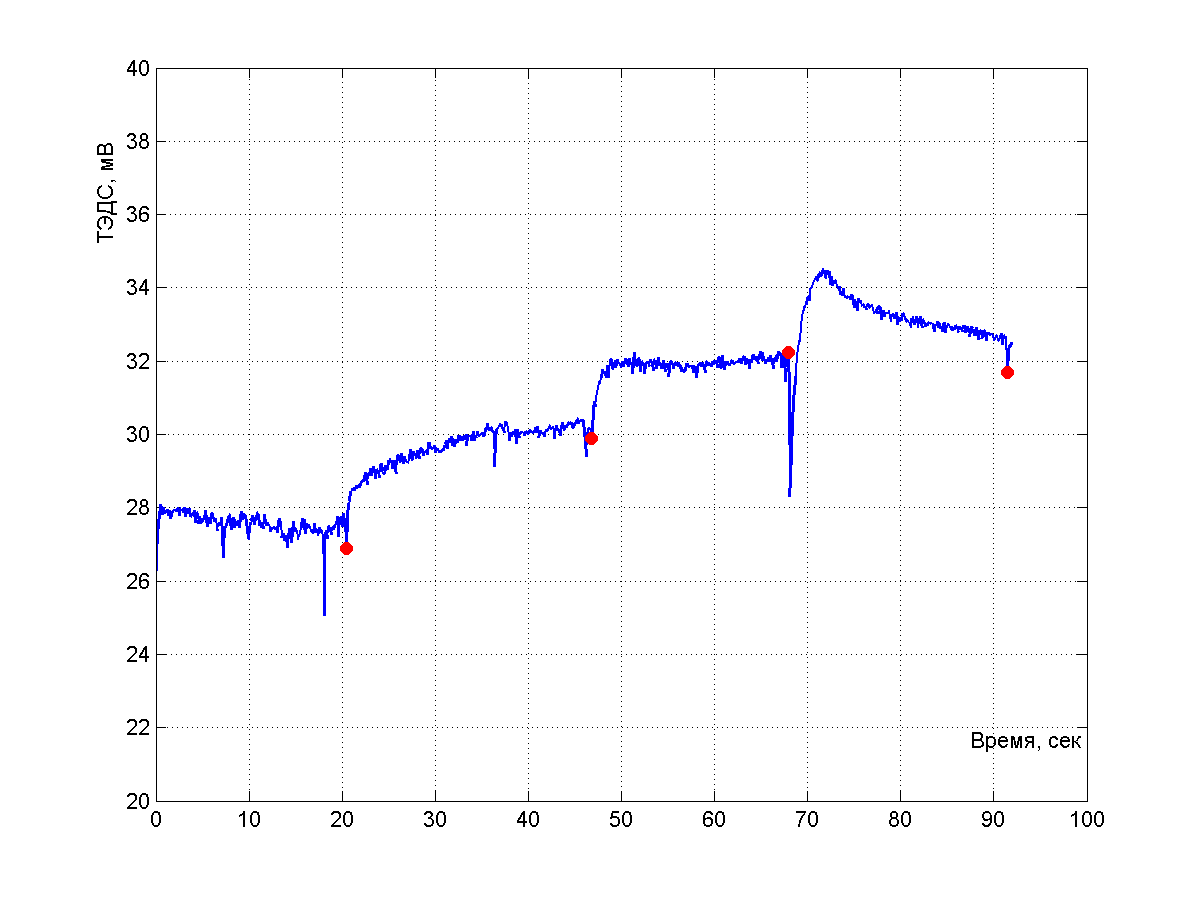
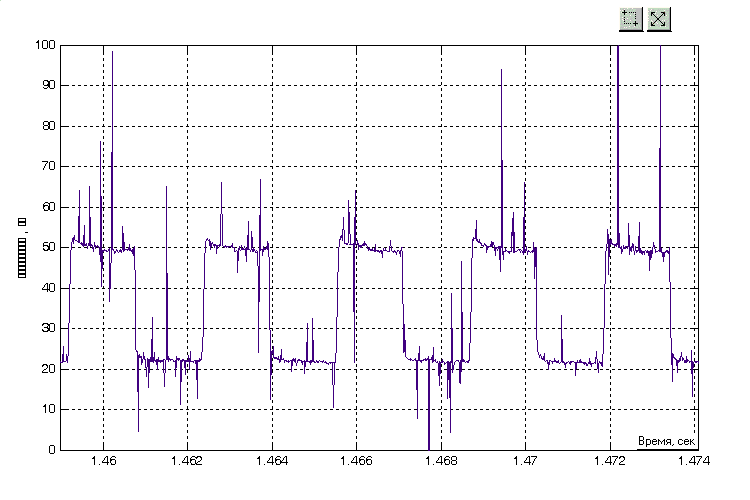
Short reference-amplitude current pulses are passed through the tool–workpiece contact. A purpose-built conductivity meter delivers 5, 10, 20 or 40 A pulses at 250, 500 or 750 Hz, packets of 2.5–10 kHz high-frequency pulses and 100 A half-wave pulses; thermo-EMF is measured between pulses and the contact voltage drop during them. The current supply path and the measuring path are separate (a power slip-ring unit and a dedicated pick-up), so machine joint resistance stays out of the measurement. Emerging microcracks and the high-frequency current being pushed to the surface (skin effect) change the contact conductivity pattern before damage becomes visible. Relative conductivity — the ratio at working feed to that at a reduced 0.07 mm/rev feed — is nearly linear with flank wear and barely depends on cutting speed or depth.
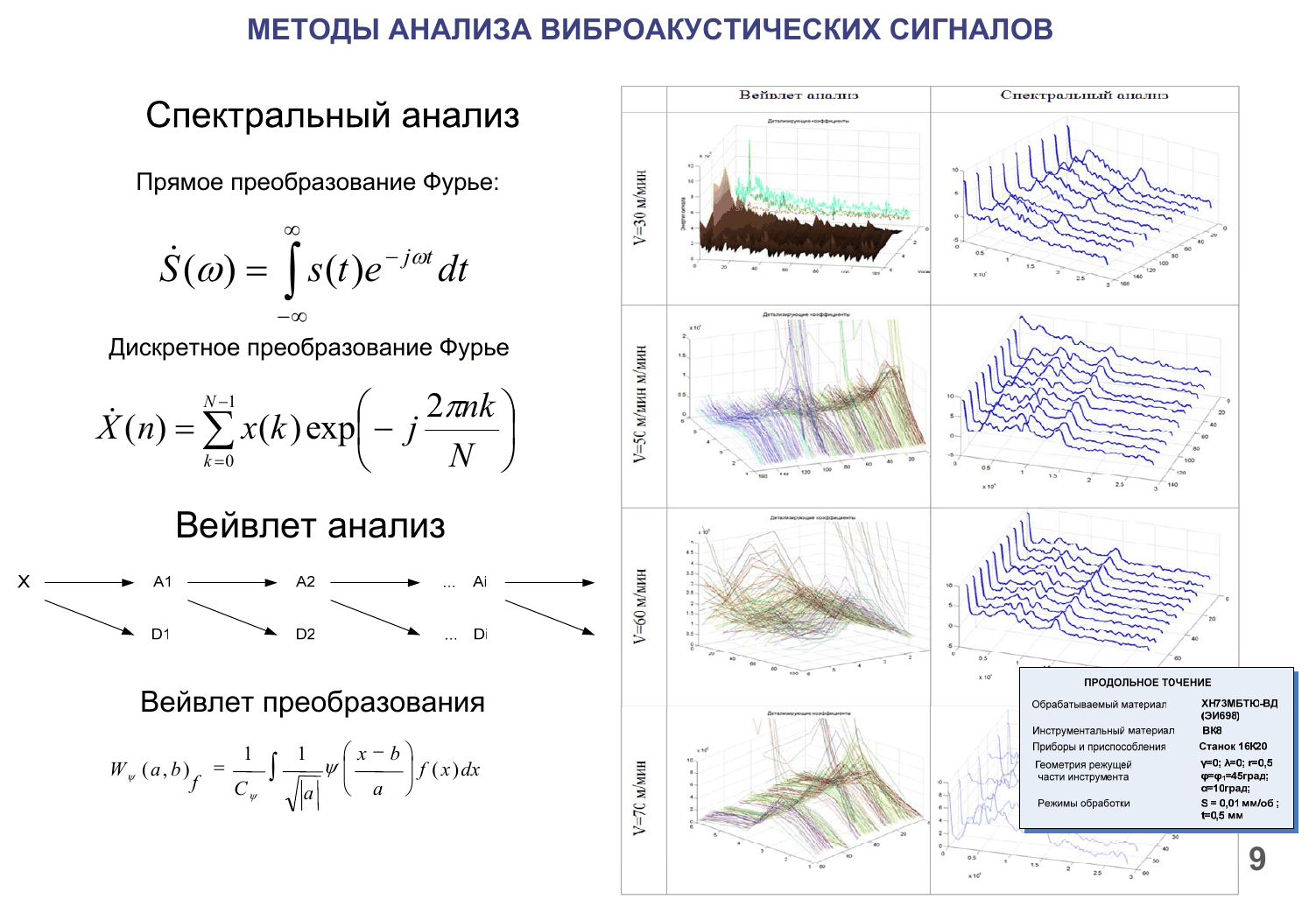
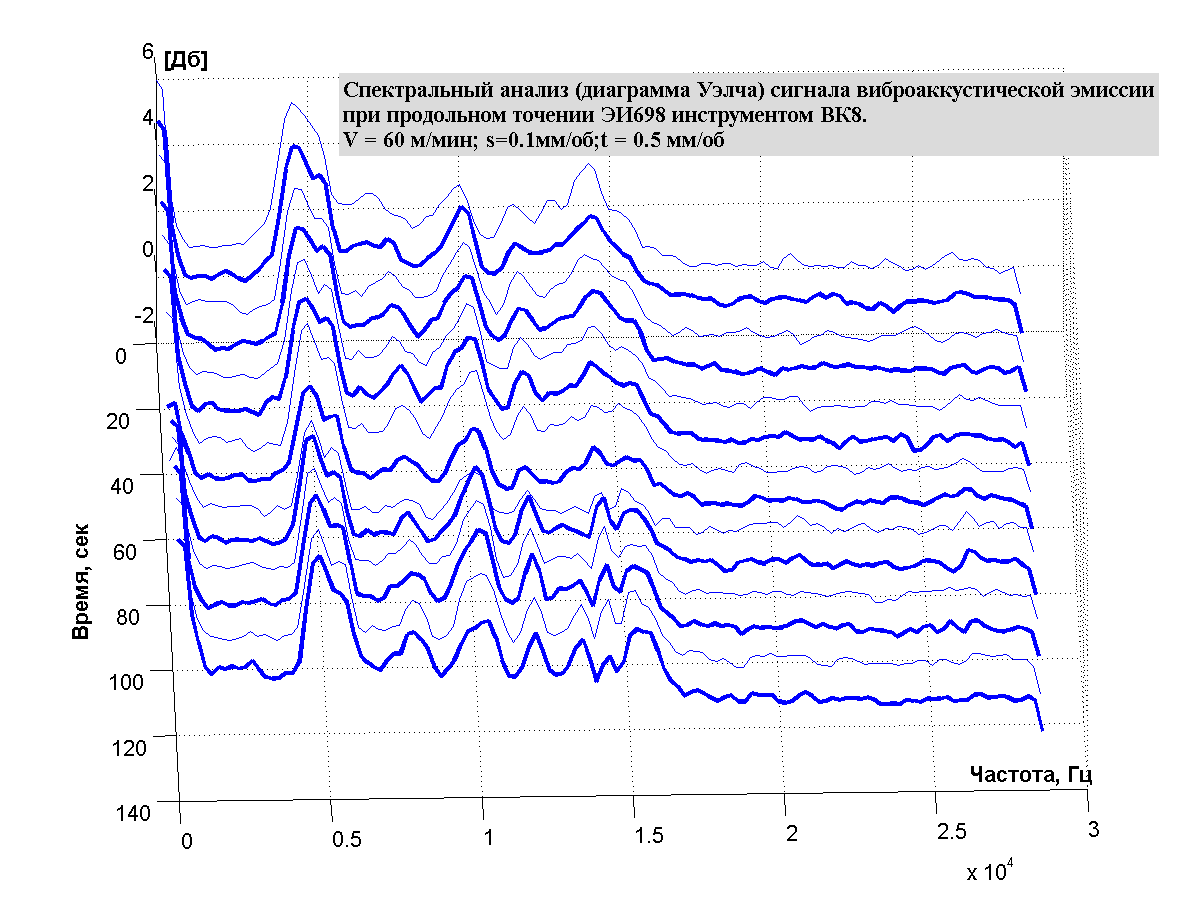
The second channel is vibro-acoustic emission. The signal is decomposed with Haar wavelets, and instead of hundreds of coefficients the energy of the detail coefficients is used: it grows with wear and is practically independent of cutting conditions. An LVQ neural network uses these features to tell a sharp tool from a worn one with close to 100% reliability, at constant and at smoothly changing cutting speed.
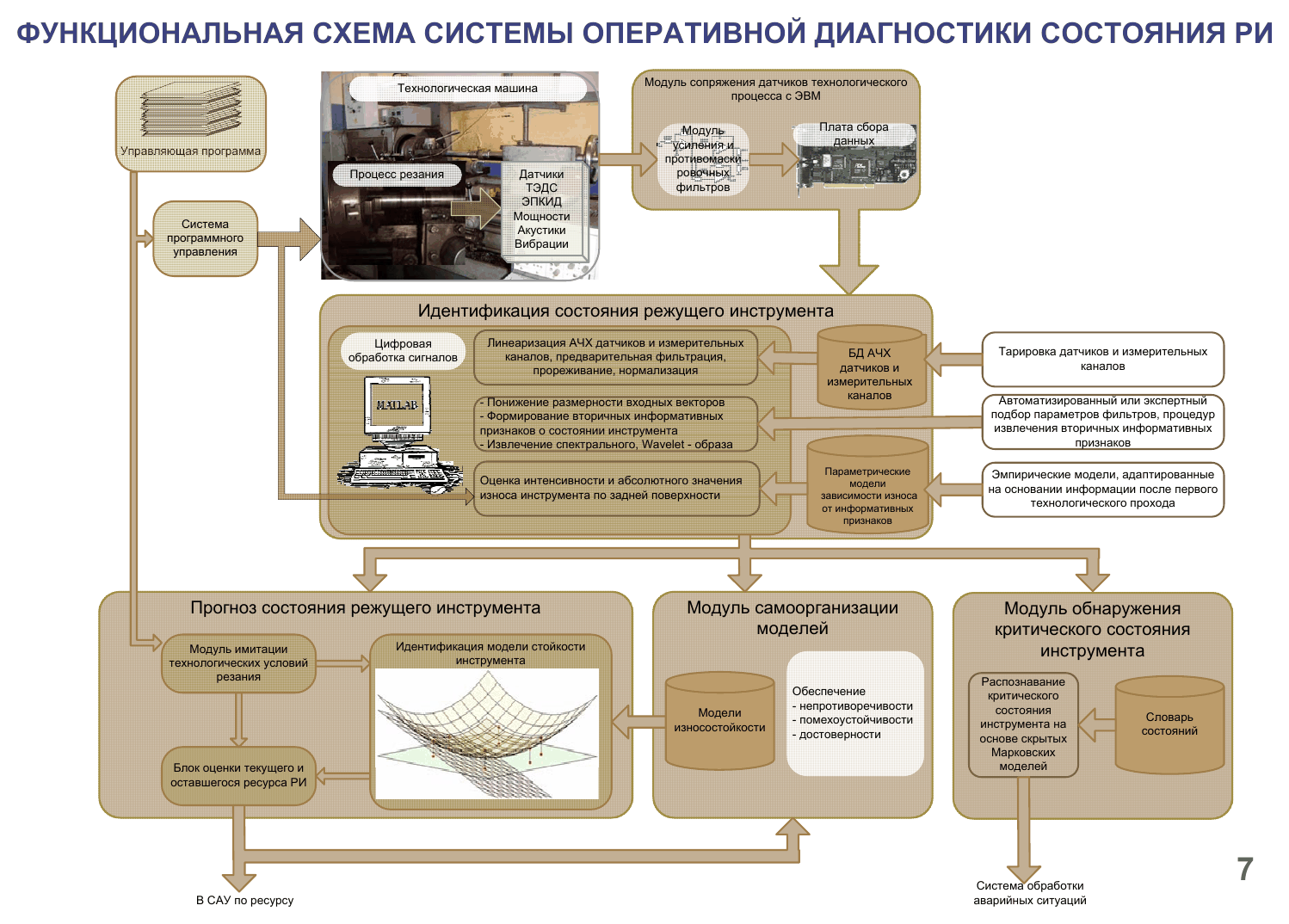
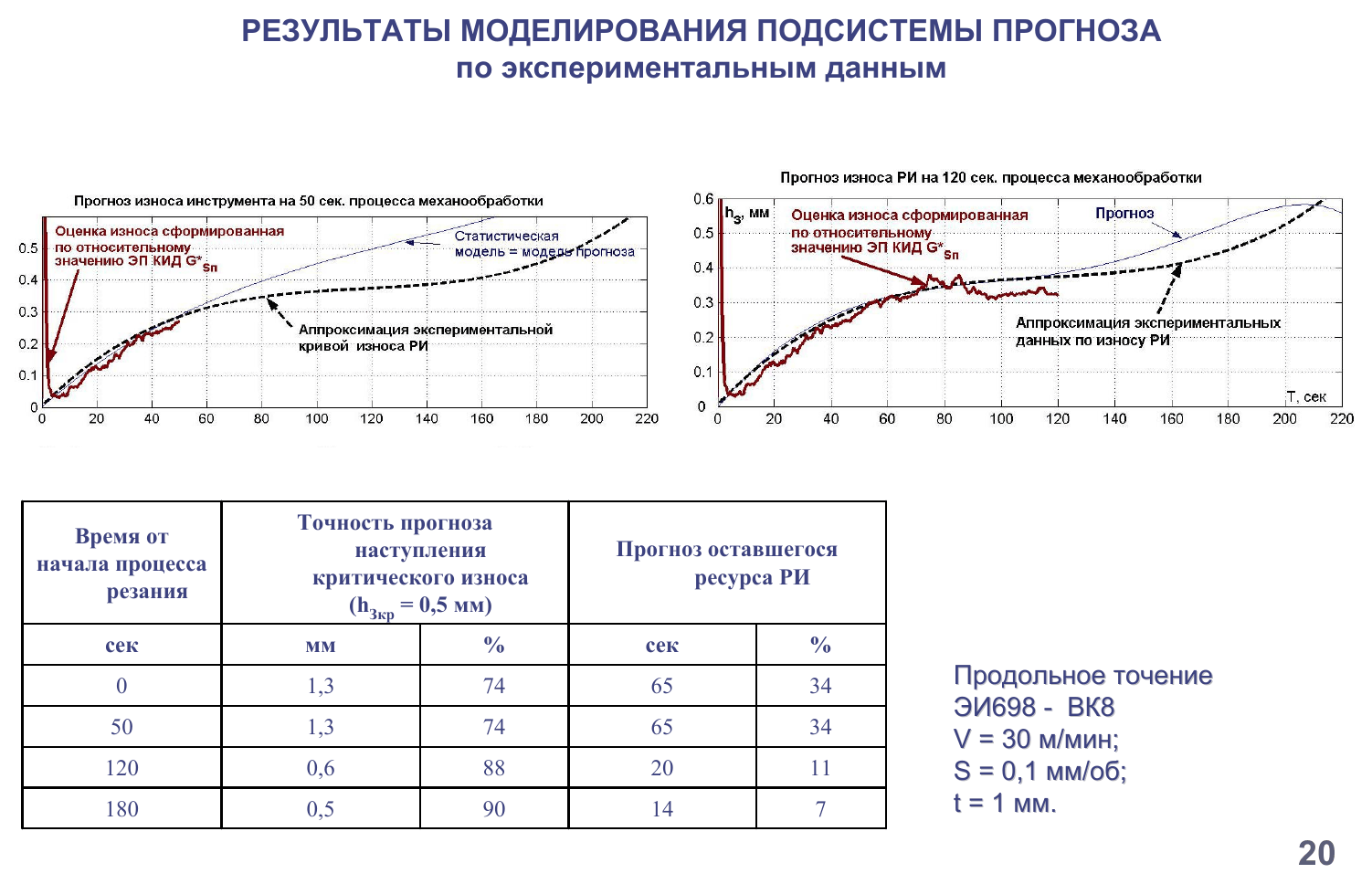
The channels work together and self-tune on the machine: conductivity or thermo-EMF marks the end of running-in, the neural network marks critical wear from vibration, and the two points give a linear conductivity–wear model. No laboratory training under a microscope is needed — the model is tuned in production on running equipment. A predictor–corrector algorithm forecasts in real time: a base model from the case database is corrected by current measurements with a term extrapolated from the residual function.
My part
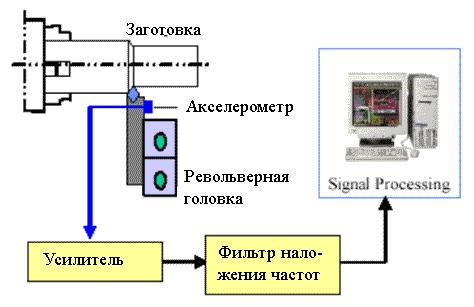
The functional design of the online diagnostic system, the conductivity meter and a lathe test rig (strain gauges, accelerometer, 14-bit 400 kHz ADC board), MATLAB software for acquisition, filtering, spectral and wavelet analysis that can replay recorded signals without repeating experiments, a cutting-process model database with vector-matrix arguments and a knowledge base with nearest-neighbour search, experiments on EI698 heat-resistant alloy with VK8 and VK60M carbide tools, neural network training.
Outcome
Flank wear is estimated in real time with error no greater than 0.05 mm, independent of cutting speed and stock variation. In longitudinal turning of EI698 with a VK8 tool (V = 30 m/min, S = 0.1 mm/rev, t = 1 mm), as data accumulated the accuracy of the critical-wear forecast rose from 74 to 90% and the remaining-life forecast error fell from 65 to 14 s (from 34 to 7%). Salavatneftemash approved recommendations for adopting the method; results are used in teaching at USATU and the council recommended them to the Sterlitamak machine-tool plant. Funded under RFBR grant 06-08-00198; 8 publications, including Vestnik USATU. Defended before dissertation council K-212.288.03, USATU, 2007.
Downloads
- Thesis abstract, 2007 (Russian) PDF, 1.2 MB
- Full thesis, USATU, 2007 (Russian) PDF, 8.3 MB
Publications and sources
Images