AMS-70 clamp-on load sensor (Armul Mass Sensor)
An optical extensometer for silo legs and structures: contents mass and load without lifting the vessel or cutting into steel.
| Years | 2026 |
|---|---|
| Client | Engix with the Armul team; for the EU — Engix Mass Sensor EMS-70 |
| Location | Russia, EU |
| Role | Project lead, system architect |
| Status | Sample tested, digital module in development |
Problem
Russia has no certified product that weighs bulk material from the strain of vessel legs and sends the data to the cloud. Load cells require lifting the vessel; foreign extensometers are costly, hard to source and closed to modification.
Solution
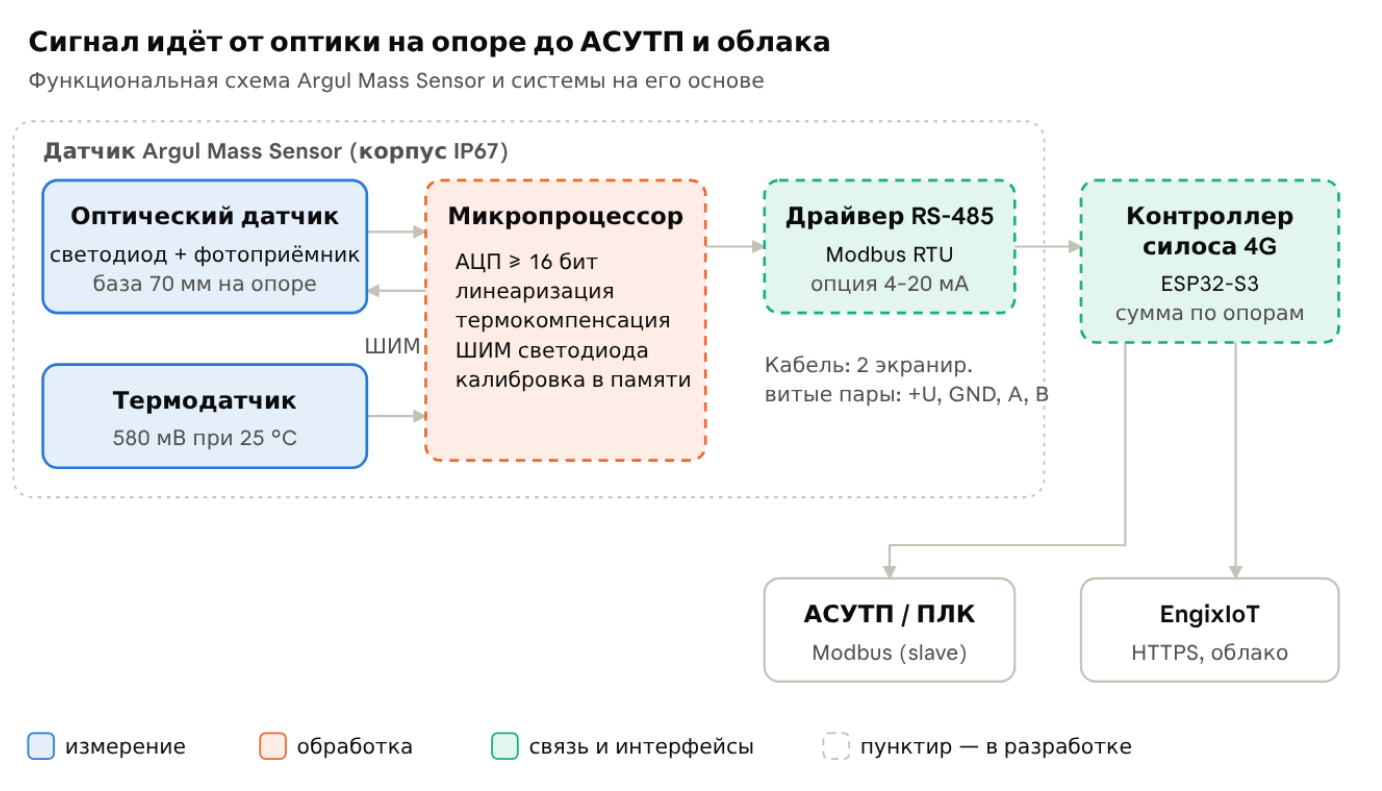
A clamp-on optical extensometer with a 70 mm gauge length measures leg compression, from which load and contents mass are computed. Series targets: −40…+70 °C, non-linearity under 0.5% after linearisation, RS-485/Modbus RTU, 9–30 V supply, IP67 and an Ex version, built-in temperature sensor for digital compensation. The sensor is part of Armul Silo (silo stock) and Armul Struct (structural loads) on the EngixIoT platform.
Done so far
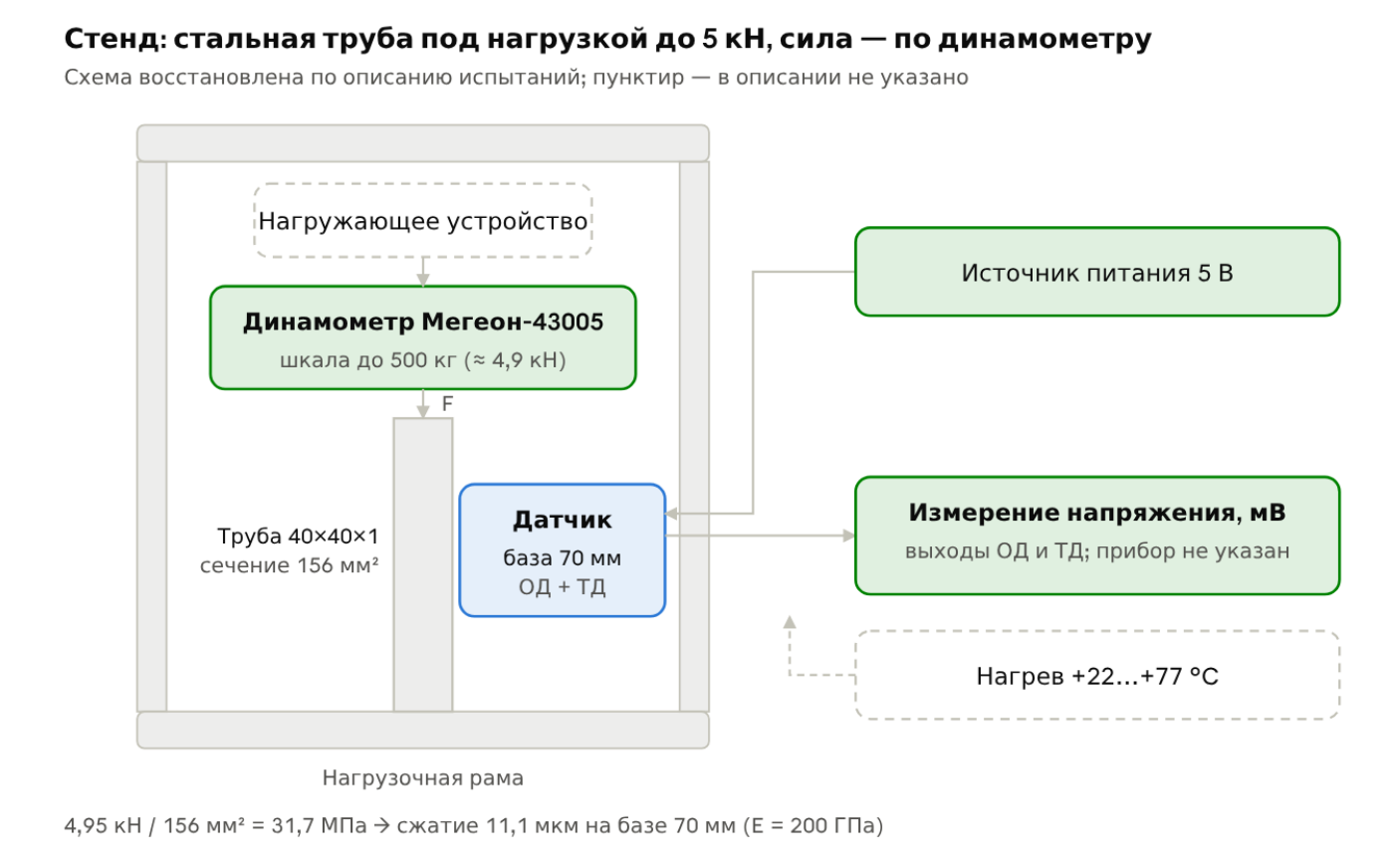
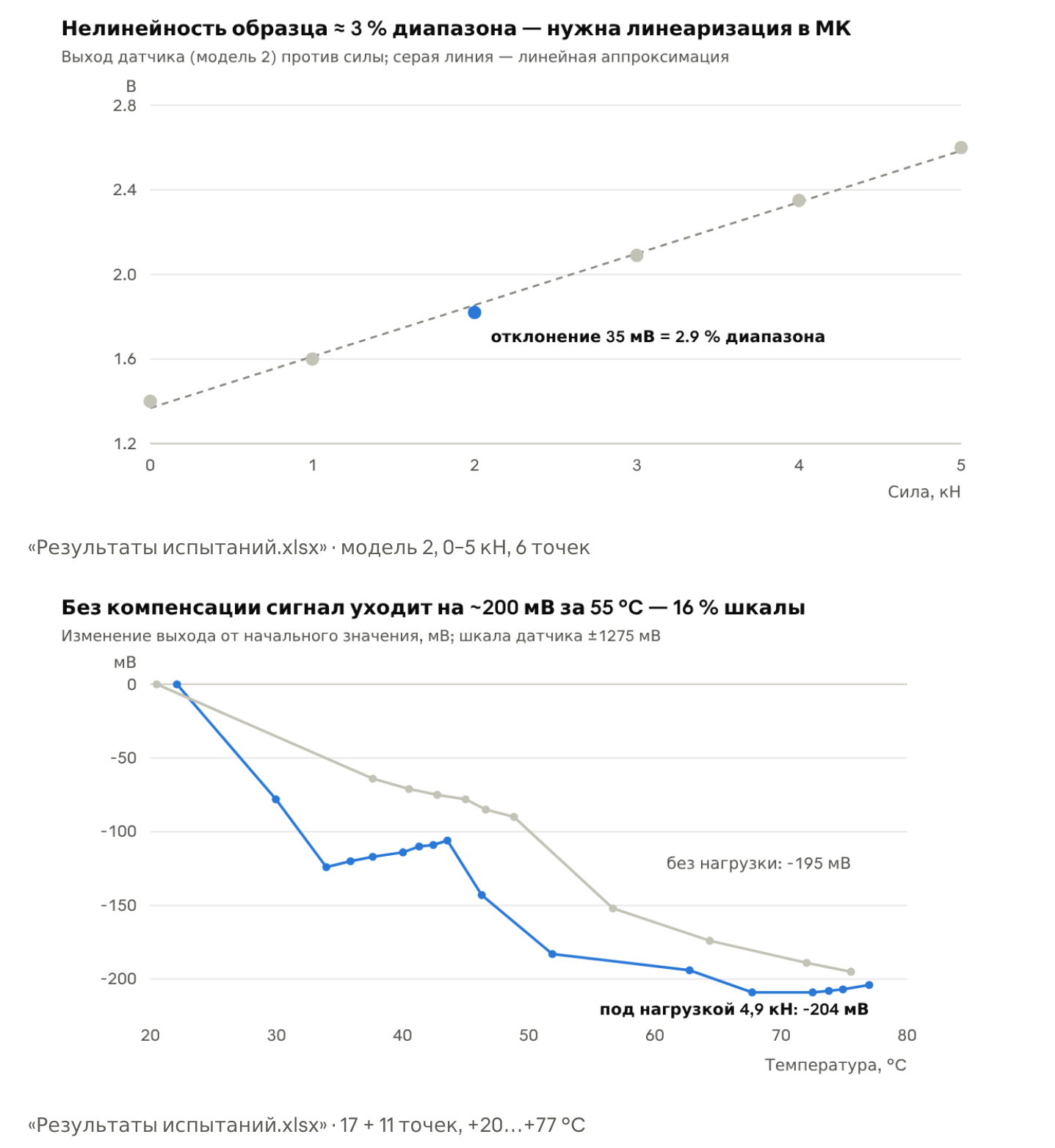
The sample was tested on a rig: a 40×40 mm steel tube loaded to 5 kN and heated from +20 to +77 °C. Sensitivity 72.4 mV/µm, resolution about 4.3 nm with a 12-bit ADC, non-linearity about 2.9%. Roadmaps for Russia and the EU, a specification for the digital module (16-bit+ ADC, MCU, Modbus RTU, temperature compensation) and draft certification documents are ready.
Next steps
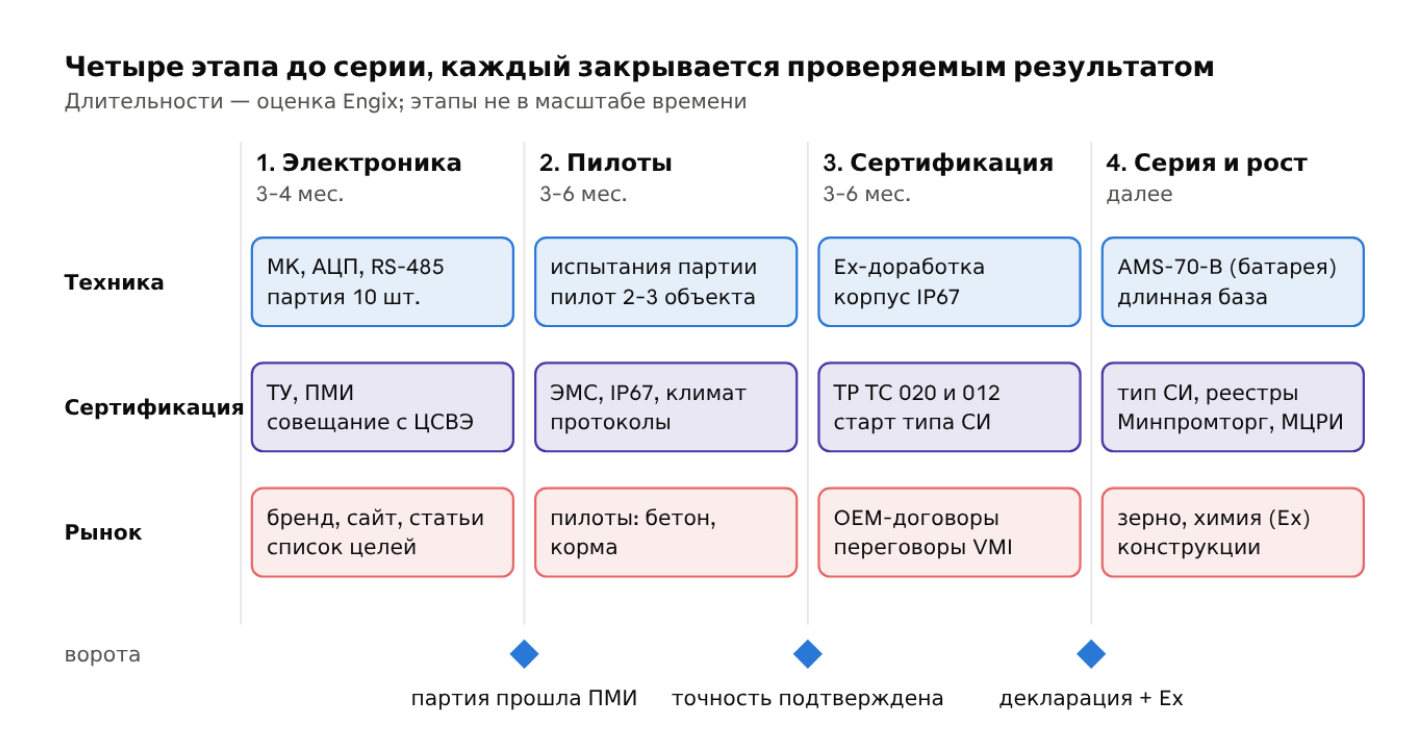
Four stages to series: electronics (batch of 10), pilots at 2–3 sites, certification (Ex, EMC, climate, measuring-instrument approval), series production and listing in the Russian industry and digital registries.
Images