LoRa transmitters for remote sites and the far north
Tens of kilometres on microwatts: telemetry for pipelines and power lines without cables or cellular coverage.
| Years | 2021–2026 |
|---|---|
| Client | Engix |
| Location | Ireland, Russia |
| Role | Protocol and architecture author |
| Status | Protocol and gateway in service, cold-climate version planned |
Problem
Oil and gas trunk pipelines, power lines and other long assets in the north often lie outside cellular coverage, and running communication and power cables to every sensor is costly. Standard field instruments need a link that runs for years on a battery and survives deep frost.
Solution
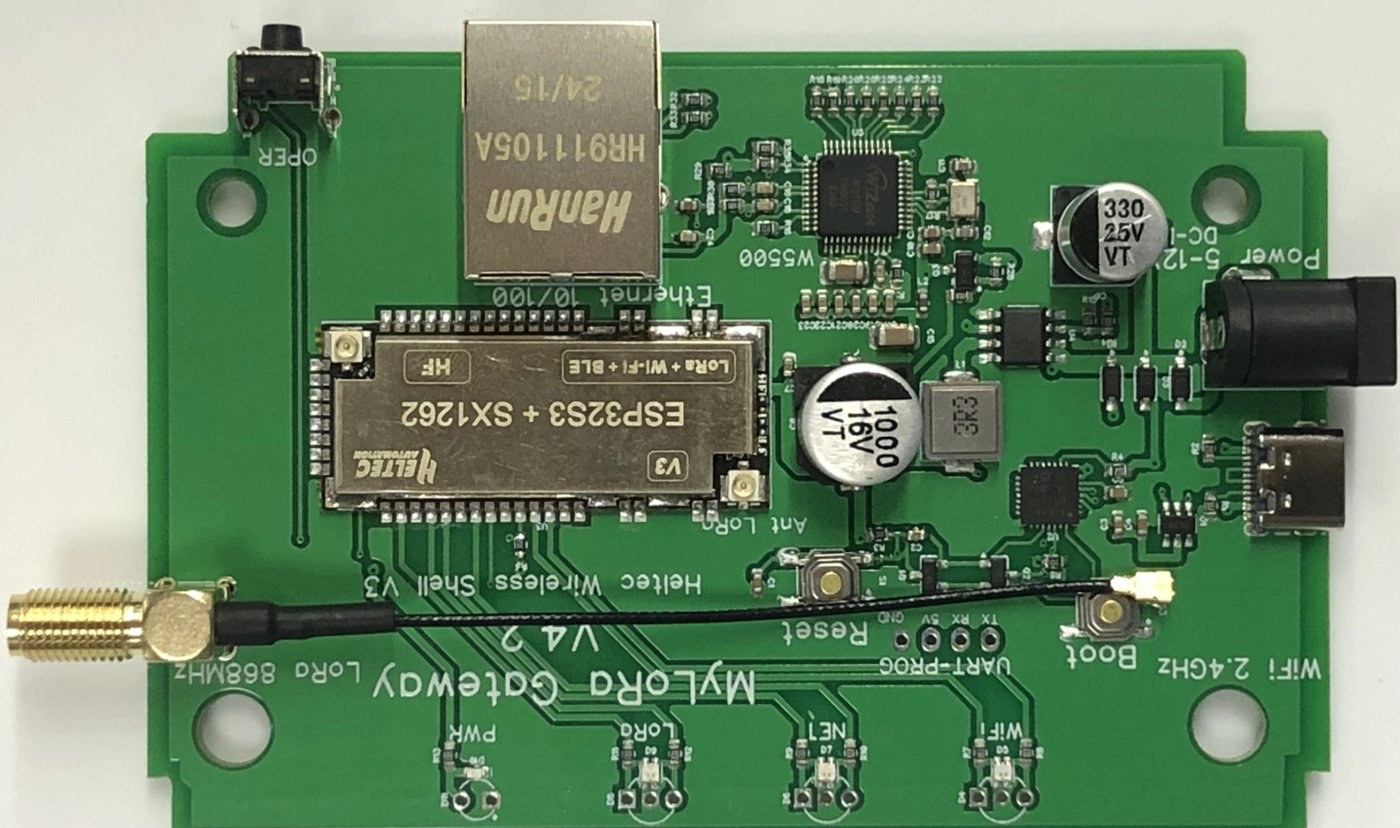
The in-house MyLoRa V3 protocol: 6-bit addressing, checksum over the whole packet, compressed payload, packet time-to-live, remote commands (cleaning, service mode). A Heltec CubeCell node with drivers for lidar, PT100 (MAX31865), DS18B20, NTC, SHT20, BME280, an accelerometer and a 4–20 mA input. The MyLoRa Gateway v4.2: ESP32-S3 + SX1262, Ethernet and Wi-Fi, over-the-air updates, forwarding to the platform.
Done so far
Protocol, node and gateway firmware, gateway schematic and PCB, cloud integration; range over 10 km in the silo-monitoring project.
Next steps
An extended-temperature version that connects standard field instruments (4–20 mA, Modbus) to monitor oil and gas pipelines, power lines and Arctic infrastructure.
Images